
HOW MUCH DOES A HOUSE EXTENSION COST IN EDINBURGH
A basic, competent house extension in suburban Edinburgh starts at £3,500 + VAT per square metre in 2026.
Most house extension projects featured in my portfolio have the construction cost for 2026 listed in the information, so you can see what it would take to build that project today. I have run Capital A since 2009 and have built dozens of projects across Edinburgh, the Lothians and Fife in that time. I have used that experience to set out a simple guide to typical house extension projects below.
Keep in mind that VAT applies to all refurbishment, repairs, alterations and extensions to homes in the UK. The costs listed here make assumptions about the amount of internal work required to the existing house, as well as the likely cost of new kitchens, bathrooms, flooring and glazing etc. If your home is in Edinburgh, the Lothians or Fife I offer a free consultation service, so I can give you more accurate advice if you contact me.

At this basic rate you get a basic but competent house extension: concrete roof tiles or a single-ply membrane flat roof, and regular-sized UPVC windows.
It does not include large areas of glass, underfloor heating, marble worktops, aluminium-framed patio doors, zinc roofs or sandstone walls. Add any of those and the price per square metre rises, as the real projects below show.
This garden room extension in Balerno would cost £6,000 + VAT per square metre to build in 2026. The brief was a year-round garden room with large sliding pocket doors that open the space to the garden, well insulated and heated so it works in every season.
The higher spec, large glazing, quality flooring and paving chosen to flow seamlessly from inside to out, is what moves this above the basic rate. See the full project.
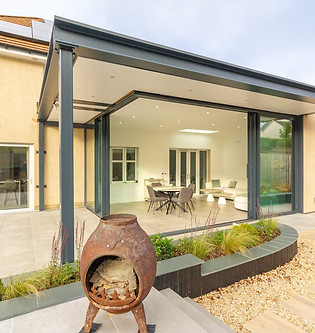

This wrap-around extension measures 45 square metres. Built to the basic specification above, concrete tiles or single-ply flat roof, regular UPVC windows, no large glazing or premium finishes, it would cost from £157,500 + VAT in 2026, at £3,500 + VAT per square metre.
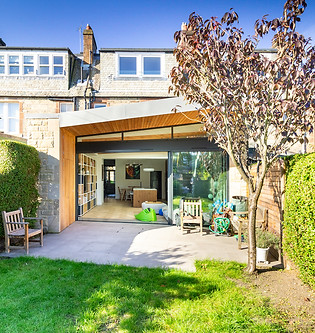
This extension to a mid-terrace townhouse in Stockbridge would cost £7,500 + VAT per square metre to build in 2026.
The premium materials that account for the higher cost per square metre: a zinc roof on exposed Douglas Fir beams, large bifold doors and sandstone walls. See the full project.
Frequently Asked Questions
Do I need planning permission for a house extension in Edinburgh?
If your house is listed or in a conservation area, planning permission is always required. If it is not listed and not in a conservation area, it will likely have permitted development rights, and a modest extension could be built without planning permission. Always apply to the City of Edinburgh Council for a certificate of lawfulness before going ahead: this confirms your permitted development rights and may be requested by mortgage lenders if you sell in future.
How much does a house extension cost per square metre in Edinburgh?
In 2026, a basic but competent house extension in suburban Edinburgh starts at £3,500+VAT per square metre. That basic rate covers concrete roof tiles or a single-ply membrane flat roof and regular-sized UPVC windows. Costs rise with specification: premium materials such as zinc roofing, large glazed openings, under-floor heating or natural stone can take the rate to £6,000-£7,500+VAT per square metre, as shown in the real project examples above.
Does VAT apply to house extension costs?
Usually yes, although if a house has been unoccupied for more than two years a lower rate of 5% VAT can be charged on new work such as a house extension. Always check with an accountant or VAT expert before going ahead.
How long does a house extension take to build?
A typical one-room, one-storey flat roof house extension measuring around 20 square metres and built from conventional materials should take around three to four months to build. The size of the building company you employ makes a big difference to the timescale: a smaller firm will usually charge less but take more time.
Should I budget a contingency for a house extension?
You should always have at least a 10% contingency fund over and above the cost of construction. If it is needed, you will usually find out in the first few weeks of building work, when demolition and excavation often reveal defective items in your existing home, such as asbestos, lead pipes, subsidence, rot, damaged drains or cracked foundations, which need to be repaired at extra expense.